

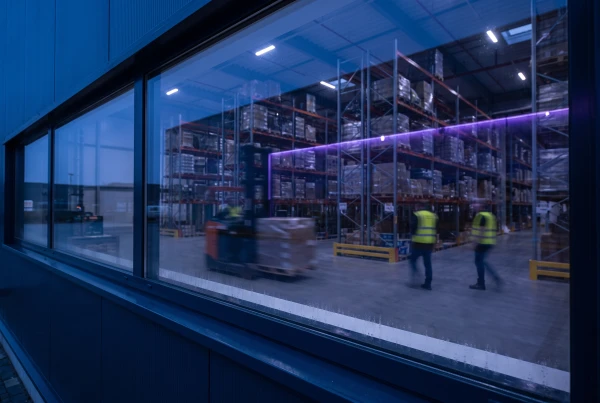



Distribution ERP has a reputation problem built on assumptions that stopped being true years ago. Wholesalers and distributors repeat these myths to each other until they harden into received wisdom, and the real cost is what never gets fixed because of them. What follows is each myth held up against what holds true for a distribution business running a modern ERP in 2026, with Odoo as the worked example.
None of this argues that every distributor needs a system overhaul this quarter. It argues that the decision should rest on what is true now, not on a version of ERP that stopped existing years ago.
Seven myths about distribution ERP, and what holds up in 2026
Each of these gets repeated often enough to sound like settled fact. None of them survive contact with how a real rollout runs.
Myth: ERP is only for big companies
This is the oldest version of the story, and probably the one costing the most businesses the most time. The reality runs closer to the opposite: the mid-market distributor, running a handful of warehouses and a growing SKU count on QuickBooks and a shared spreadsheet, is the exact business modern ERP is built for. A ten-person wholesaler with real order volume gets more from one connected system than a thousand-person company that has already wired ten specialized tools together. Size was the barrier when ERP meant a server room and a license priced for a Fortune 500 budget. It is not the barrier now, and the mid-market is where most Odoo distribution work happens. Sage and NetSuite cover the same ground at larger scale.
Myth: it will take a year and break everything
The horror stories are real, and almost all of them share the same root cause: the whole catalog, every integration, and every report treated as one all-or-nothing launch day. A phased go-live avoids that by putting accounting, inventory, and order processing live first, since those three do the most damage when they disagree, then adding the rest once that foundation holds. A distributor that sequences the rollout this way is not betting the business on a single weekend. A distributor that does not is where the year-long horror story comes from.
Myth: our spreadsheets work fine
They work until the exact moment they do not, and that moment is expensive. Every order re-keyed from an inbox into a spreadsheet and then into an order system is a chance for a wrong quantity, a wrong SKU, or a stockout nobody catches because the sheet was updated an hour after the pick happened. Distribution runs on the gap between what the system says is on hand and what is physically on the shelf, and a shared spreadsheet cannot close that gap in real time no matter how disciplined the team keeps it. Our Odoo Inventory work exists mostly to close that gap.
Myth: all ERPs are basically the same
If every ERP behaved the same way underneath, there would be no reason for so many distributors to switch systems after a first implementation went wrong. The difference that matters most is whether sales, inventory, purchasing, and accounting sit on one data model or are separate modules bolted together after the fact. One data model means every department reads the same number at the same moment. Bolted-together systems mean the same order or the same stock count gets synced, mapped, or typed twice between databases that do not fully trust each other, which is where distribution operations lose the most hours.
Myth: it is too expensive for a distributor our size
Odoo publishes its per-user pricing instead of quoting it privately case by case. Standard licensing runs $31.10 per user per month in the US, billed yearly, a number any distributor can set next to what the current mix of spreadsheets, a bare-bones accounting package, and the staff hours spent reconciling them already costs. The expensive part is rarely the software subscription. It is the manual re-keying, the stockouts, and the orders shipped wrong that a disconnected setup keeps generating quietly in the background, month after month.
| Odoo licensing (published, US, billed yearly) | Price |
|---|---|
| One App (single app only) | Free |
| Standard | $31.10 per user/month |
| Custom | $61.00 per user/month |
Full detail on both the license and what a fixed-fee setup costs on top of it lives on our pricing page.
Myth: migration means downtime and lost data
A migration planned as a single unrehearsed cutover is the version that goes wrong, and it is where this myth comes from. A tested staged cutover runs the new system alongside the old one, moves data in stages, and rehearses the actual go-live with real orders before the old system is switched off, so the final date is a formality rather than a gamble. Lost data during a migration is almost always a missing rehearsal, not something inherent to moving between systems.
Myth: we will be locked into one vendor
Odoo’s core is open source, and the data underneath it exports in standard formats rather than sitting trapped in a structure only one company can read. Sage and NetSuite are closed, but both export cleanly enough that lock-in is a contract question rather than a technical one. That does not remove all effort from switching partners or systems later. It does mean the specific fear behind this myth, being unable to leave without losing years of records, does not describe how this system is built. In practice that means product, customer, and transaction data exporting to standard formats like CSV, and a database structure a new partner can read without reverse-engineering it first. Nobody signs on planning to leave. What matters is whether leaving stays possible.
Three more distribution ERP myths worth retiring
These come up less often than the first seven, but they stop just as many rollouts before a quote gets written.
Myth: switching means ripping out the WMS or the 3PL integration
A working warehouse management system or a solid 3PL relationship does not get discarded just because the ERP underneath it changes. Odoo’s inventory layer connects to an existing WMS or 3PL through the same API or EDI channel already in use. The grain of truth: a manual file export someone re-uploads by hand was already the real gap.
Myth: the barcode scanners and warehouse crew need retraining from scratch
Scan-to-receive, scan-to-pick, and scan-to-pack are workflows, not brand loyalty, and most scanners connect over standard protocols that do not care which ERP sits behind them. What changes is mostly the screen, not the job. The grain of truth: a process built on memory, not a written procedure, breaks during any changeover.
Myth: custom pricing rules and customer-specific catalogs will not survive the move
Price lists, contract pricing, tiered pricing, and customer-specific catalogs are standard configurable records in a distribution ERP, not something bolted on later. The grain of truth: pricing that lives only in one salesperson’s head takes real work to document before it can be configured. That work is real, but it is not a loss of the pricing itself.
What a distribution business needs from an ERP
The shorter, harder-to-fake version of a feature list: the mechanics a distribution operation runs on.
- Multi-warehouse stock visibility: one real-time count per location, visible to sales and purchasing at once.
- Lot and serial traceability: tracing a unit back to its batch or serial, both directions, no side spreadsheet.
- Unit-of-measure conversions: case, pallet, and each defined once and applied the same way across purchasing, inventory, and sales.
- Landed cost: freight, duty, and handling folded into per-unit cost, not tracked separately from the invoice price.
- Backorder and partial shipment handling: an order shipped in three pieces stays one order with three shipments, not three disconnected records.
- Customer-specific pricing and price lists: contract and tiered pricing applied automatically at order entry.
- EDI, 3PL, and carrier integration: orders, ASNs, and tracking numbers moving between systems without manual re-keying.
- Replenishment rules: minimum and maximum stock levels, reorder points, and lead-time-aware ordering.
The honest test of any ERP candidate is whether it handles all eight without a workaround, which an ERP consultant should confirm before quoting a number.
The cost of one wrong unit-of-measure setting
Take a common, unglamorous setup mistake. Purchasing buys in pallets; sales sells in eaches. Say the true pack size is 144 units per pallet, but the conversion factor configured in the system reads 120. Both numbers look plausible enough that nobody checks twice.
Every purchase receipt now understates stock by 24 units per pallet. Every sale draws down the eaches count and prices margin against the wrong per-unit cost, so reported margin is wrong on every order touching that SKU. The gap will not show up on a report, only during a physical count, when the shelf holds more stock than the system says should exist.
The fix is not a smarter spreadsheet. It is one unit-of-measure conversion table, shared by purchasing, inventory, and sales, defined once and referenced everywhere those three functions touch the SKU. Getting that setup right before go-live is exactly what a properly scoped Odoo implementation checks first.
When a distributor genuinely does not need ERP yet
Not every distributor is underserved by spreadsheets, and it is worth saying so plainly. A single-channel operation with a small, stable SKU count and one person who can hold the whole business in their head does not have a problem ERP solves yet. A single owner-operator running one warehouse, one sales channel, and a SKU count low enough to recite from memory is often better served by getting the basics disciplined first: clean books, a real count, one place where orders get entered. ERP earns its keep once that discipline already exists and the business has outgrown it, not before. The moment to revisit the question is not a date on a calendar. It shows up when a second warehouse opens, a second sales channel gets added, or the SKU count grows past what any one person can track before the spreadsheet quietly goes stale between updates.
In concrete terms, that usually looks like one warehouse, a catalog still countable in the low hundreds of SKUs, one sales channel, and books that already close cleanly in QuickBooks. None of that is a small business apologizing for its size. It is a business that has not yet hit the seams ERP exists to close.
How a distributor tests whether it fits
The honest test is not a features demo. It is a walkthrough of how orders, stock, and shipping move through the business today, and a plain look at where the same information gets typed more than once. That walkthrough usually turns up the same handful of culprits: an order retyped into a second system, a stock count nobody fully trusts, and a report someone rebuilds by hand every week because the real numbers live in three places at once. That is the conversation we have with every wholesale and distribution client before any system gets touched, and it is worth reading how it played out for one of them: a wholesaler that eliminated duplicate order entry and automated its shipping updates once orders, inventory, and delivery ran through one connected setup instead of three disconnected ones.
The pattern underneath the myths
Nearly every myth on this list traces back to the same root: an implementation with no rehearsal, no phased plan, and a vendor who oversold the timeline. That also means the fix has nothing to do with finding some mythical, foolproof piece of software. It has to do with the plan built around it: a partner who shows the rehearsal before asking for a go-live date, and scopes the fee in writing before asking for a signature. Pick a partner who plans the rollout honestly and tests it before switching anything off, and most of these myths stop being true for reasons that have nothing to do with luck.

Frequently asked questions
What is a distribution ERP?
A single system that runs sales orders, inventory, purchasing, and accounting for a wholesale or distribution business from one shared set of records, instead of separate tools that have to be kept in sync by hand.
Do small distributors need ERP?
Not always, and not on day one. A single-channel operation with a small, stable SKU count and one person who can see the whole business at a glance can run on spreadsheets for a while. The need shows up with a second warehouse, a second sales channel, or a SKU count nobody can hold in their head anymore.
Is Odoo good for wholesale distribution?
Yes, for the workflows distribution runs on. Sales, inventory, purchasing, and accounting sit on one data model instead of bolted-together modules, and Index World is an official Odoo Partner with a wholesale distribution client already running order, stock, and shipping sync on it.
How much does distribution ERP cost?
Odoo licensing is published: Standard runs $31.10 per user per month in the US, billed yearly, separate from implementation. Implementation itself is scoped and quoted per project rather than billed by the hour, so the total depends on how many warehouses, channels, and integrations are involved.
Will ERP disrupt my warehouse operations?
A well-planned rollout should not stop the warehouse. A tested staged cutover runs the new system alongside the current one and rehearses real orders before anything switches off, so picking, packing, and shipping keep running through the transition instead of pausing for it.
How long does distribution ERP take to implement?
It depends on scope rather than a fixed industry number. A phased go-live that puts accounting, inventory, and order processing live first, then adds the rest once that foundation holds, is usually faster and safer than treating the whole rollout as one single launch day.
Can ERP handle multiple warehouses?
Yes. Multi-warehouse stock visibility, per-location reorder rules, and stock transfers between locations are baseline distribution ERP functionality, not a custom build. The real gap is usually a tool that does not update in real time, not an inability to show multiple warehouses.
Does moving to ERP mean replacing the WMS or 3PL integration?
Not necessarily. A working WMS or 3PL relationship can stay in place and connect to the new ERP through the same API or EDI channel it already uses. The integration gets rebuilt only when the current one is a manual file export, not a real connection.
Most of what gets blamed on distribution ERP is a bad rollout wearing an ERP costume. Bring your own numbers to a free demo and see which of these myths still apply to your operation.