


Ecommerce ERP Integration for Shopify, Amazon and B2B
Selling on more channels grows revenue, and complexity. Orders, stock, shipping, and customer data end up scattered across platforms, and keeping them straight eats your day.
We connect your stores, marketplaces, and shipping providers into one automated workflow. Your team works in a single place while data stays in sync everywhere else.
Order-to-cash on every channel, one stock position behind them, and books that reconcile themselves: that is the whole build.


Multi-Channel Ecommerce Services
From a marketplace order to a shipped, tracked parcel: here’s where we connect your operation.

The Shopify order lands
Every channel captured in real time, with no copy-paste between systems.

Stock moves before the second sale
One shared stock source means you never sell what you do not have.

The label prints from the order
Shipping labels generate from the order and sync straight back to Odoo.
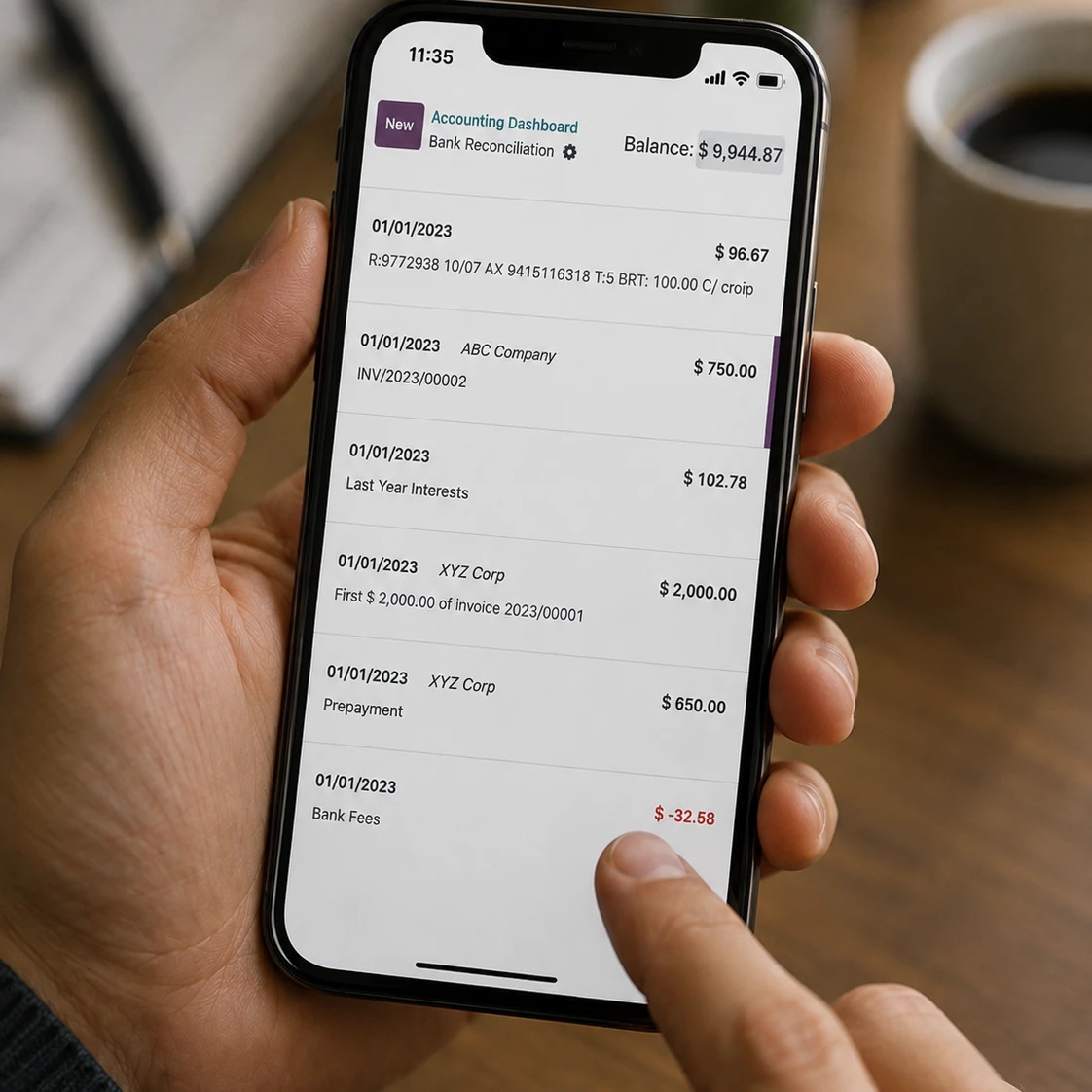
The marketplace fee posts to its own account
Amazon and Shopify settlements reconcile inside Odoo, matched line by line.
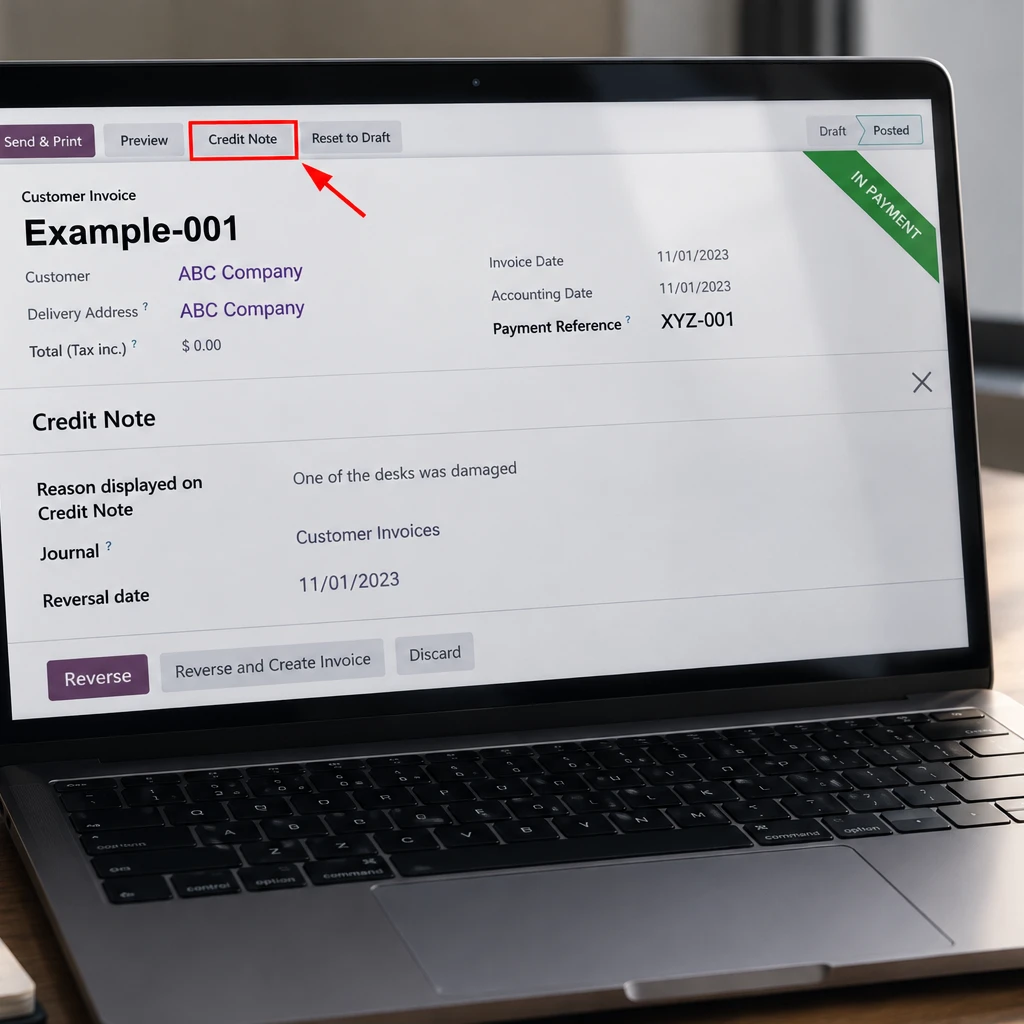
The refund finds the original order
Credit notes recorded cleanly against the original order, whichever channel it came from.

The dashboard already knows
Revenue and orders by marketplace and storefront, live, with no export.

What Is Ecommerce ERP Integration?
Ecommerce ERP integration connects your storefronts and marketplaces to one operating system, so orders, stock, customers and money move without retyping. An order placed on Shopify or Amazon books its own stock move, invoice and shipment in the ERP. The delivery is raised for the warehouse, the tracking number travels back to the channel, and the fee the marketplace kept is already an expense line waiting for its payout. Asked what ERP in ecommerce actually does, that connection is the answer.
Our multi-channel ecommerce solutions bring every channel into one connected workflow. Orders, inventory, customers, shipping and financial data stay synchronized automatically, so the storefront, the warehouse and the ledger stop disagreeing about what happened today.
Why businesses choose us
Armor Concepts sells the same lock on BigCommerce, Amazon and Shopify. One stock figure serves all three channels, the marketplace fees land in their own account, and nobody retypes an order. The setup has since been upgraded four versions without breaking the sync. That is the whole idea.
The result
Follow one order and the case makes itself. It lands at breakfast, is picked before the courier arrives, and its tracking number is back on the marketplace before the customer thinks to ask. Nobody typed anything, the stock figure every other channel sells from has already dropped, and when the payout arrives the fee is sitting in its own account.
The same thread holds at month end. A marketplace settlement arrives as one payout covering weeks of orders; the integration splits it back into the orders inside it, posts each fee to its own expense account, and matches the bank statement line against the lot. A refund does not open an investigation either: the credit note books against the original order, the stock returns to sellable or is written off, and the channel and the ledger tell the same story. Reconciliation becomes checking, not archaeology.
Oversell prevention is the same discipline applied at speed. Stock is reserved the moment an order confirms, not when somebody notices it; the last units are held back where you choose; and because every channel reads one position, a spike on Amazon lowers what Shopify can promise within the sync window, not overnight. The dashboard reads the same position, so what the channels promise and what the warehouse holds are never two different numbers.
Ecommerce ERP Software by Function
How We Work With You
A proven, phased path, designed around real multi-channel operations, so your team goes live without the chaos and keeps improving after launch.
- DiscoveryA deep-dive into your channels, catalogue, order flow, and fulfilment mix.
- Data & Channel MappingProducts, customers, price lists, and channel connectors mapped from your current setup.
- Staging Build & ConfigurationIntegrations configured and tested end-to-end on a staging environment before go-live.
- Training + eLearning LibraryEvery configuration recorded and loaded into your team’s self-serve reference library.
- Go-Live with SupportPhased cutover across Sales, Inventory, Fulfilment, and Accounting, with our team standing by.
- Post-Launch OptimizationNew channels, integrations, upgrades, and dashboard iterations as you grow.

Business Challenges We Solve
The bottlenecks of multi-channel selling show up as moments in an ordinary day. Here is one online order, followed from first click to closed books, and the problems it no longer causes.

Morning: The Order Lands Once
An Amazon order, a Shopify order and a wholesale reorder arrive in the same queue. Nobody opens five back offices to find them; every channel is worked from one screen.

Mid-Morning: Nothing Is Retyped
The order that was once keyed into the store, the shipping app and the books now books itself: sales order, delivery, invoice, customer record. The hours lost to copy-paste go back into selling.

Noon: The Count Still Holds
Every sale this morning already lowered the shared stock position, so inventory accuracy survives the rush. When the last unit sells on one channel, the others stop promising it within the sync window.

Early Afternoon: A New Channel Joins
Adding the next marketplace is a connector and a price list, not a new hire. The day you are watching runs the same however many channels write into it, the business scales by adding channels, not by adding headcount or complexity.

Late Afternoon: Picked, Packed, Gone
The delivery was raised the moment the order landed, so the picker never waited on an export. The label and tracking post back to the channel, and the customer hears before they ask.

End of Day: Live Numbers, No Export
Real-time dashboards show sales, stock and fulfilment across every channel as the day actually went, so tomorrow’s decisions are made on tonight’s numbers, not last week’s export.
FROM THIS INDUSTRY
Armor Concepts sells on BigCommerce, Amazon and Shopify from one Odoo system.
Orders, stock and tax unified across channels, then upgraded four versions without breaking the sync.
Read the Armor Concepts story →B2B Ecommerce ERP Integration
Consumer channels get the attention; wholesale carries the weight. B2B ecommerce ERP integration gives every trade customer their own portal: contract pricing, credit limits, reorder lists and invoices, all reading from the same stock and ledger as your retail channels. No rep in the loop for routine orders.
A B2B ecommerce ERP setup also enforces the boring rules that protect margin: minimum quantities, customer-specific price lists, credit holds that actually hold. We build it on the same integration backbone as the rest of your channels, so wholesale is a lane, not a second system.
The order thread does not change for wholesale. A portal reorder reserves the same stock as the marketplace order, invoices on the customer’s terms instead of at checkout, and lands in the same reconciliation run as the consumer payouts: one warehouse, one ledger, every channel writing to it.
Five Tools Today. One System After.
This is the swap multi-channel sellers actually make: not another app in the stack, but replacing the pile that grew one channel at a time.
What the operation runs today
- Stock counted in a spreadsheet that is wrong by Friday
- Orders retyped from the marketplace into accounting
- A shipping app that never tells the store what shipped
- QuickBooks that has never heard of the Amazon fees
- Price changes made five times, in five back offices
What it becomes on one system
- One stock position, updated by every channel in real time
- Orders that book their own invoice, stock move and shipment
- Tracking that flows back to the channel and the customer
- Marketplace fees reconciled into the books automatically
- One price list, pushed everywhere it applies
Nobody switches overnight, and you should not either. We move one channel at a time, prove it, then move the next. See how a platform switch runs.
The Stack, Wired Into One Order Book
Multi-channel only works when every channel writes to the same record: the storefronts that take the order, the marketplaces that take a fee, the carriers that move it, and the ledger that has to explain it all. These are the connections we build most, each one running in a live store today.
Storefronts
SalesShopify, BigCommerce, WooCommerce and Freely in real-time two-way sync: products, pricing and stock flow out, orders and customers flow back, and deliveries are raised the moment an order lands.
Every storefront sells from the same stock truth, and orders arrive ready to pick.
Amazon and Marketplaces
MarketplacesAmazon runs full order-to-cash in Odoo: orders, deliveries, invoices, payments, bank statements, credit notes, refunds, taxes and price lists, with salesperson and sales-team mapping, and every marketplace fee posted with its tax treatment attached.
Marketplace tax lands coded to the right state, not to a month-end mystery.
Payments and Gateways
BillingGateway payouts reconcile back to the orders inside them, with fees split out to their own account instead of buried in revenue.
Payouts reconcile to orders, fees and all, with nothing matched by hand.
ShipStation and Carriers
FulfilmentShipStation labels, carrier rates and tracking numbers come off the order and post straight back, and partial shipments post honestly so a split order never reads as an unshipped one.
Labels, tracking and partials post themselves back to the order.
Accounting
FinanceRun the books in the same system, or keep QuickBooks connected while you decide. Either way sales, refunds and payouts land once, in the right period.
One set of books that agrees with what actually shipped.
Ad Platforms and Attribution
AttributionAd clicks carry through to the CRM record, so revenue ties to the campaign. We built exactly this for a US door-hardware seller.
You see which ad made which order, in the same system that shipped it.
Do not see the tool you run? An open API means if it can talk, we can connect it.
Got questions? We’ve got answers.
Which sales channels can you connect to Odoo?
Amazon, Shopify, WooCommerce, BigCommerce, and Freely for selling, plus ShipStation for fulfilment, and most other marketplaces and storefronts on request.
Will my inventory stay in sync across every channel?
Yes. Stock updates in real time across all connected channels, so you avoid overselling and keep every storefront accurate.
Can you automate Amazon invoicing, taxes, and refunds in Odoo?
Yes. Amazon runs end-to-end: orders, invoices, payments, bank statements, credit notes, refunds, taxes, and price lists, all booked in Odoo.
Do you handle shipping labels and tracking?
Yes. Our ShipStation integration brings shipping labels and tracking numbers into Odoo, so every order is traceable from dispatch to doorstep.
We sell on a platform that isn’t listed. Can you still help?
Very likely. We maintain in-house connectors for marketplaces, storefronts, payment gateways, and shipping managers, and our approach covers most e-commerce platforms. Tell us your stack and we’ll scope it.
How long does a multi-channel integration take?
It depends on channel count, catalogue size, and finance complexity. We publish a tentative timeline in the first two weeks of engagement.
Why integrate ecommerce and ERP?
Because the gap between them is where money leaks: oversells, retyped orders, fees nobody reconciled, stock nobody trusts. Integration makes the storefront and the back office read one record, so orders, inventory and accounting agree without anyone copying data. The usual result is fewer errors and a team freed from keystrokes.
How do you connect an ecommerce platform with NetSuite ERP?
Through NetSuite’s connectors or middleware, and we build those when staying on NetSuite is right. The honest second question is cost: if NetSuite pricing is the reason you are asking, compare a migration before buying more integration. Our NetSuite to Odoo comparison covers both paths.
When to implement an ecommerce ERP solution?
When channel two arrives, or when the spreadsheet starts lying: oversells, unreconciled marketplace payouts, a stock count nobody believes. Implementing before peak season beats implementing during it. If you are already firefighting daily, a phased integration can start with the channel that leaks most.
How to choose an ecommerce ERP for Shopify, WooCommerce or Magento?
Asked for the best erp for ecommerce, our answer is fit, not feature count: native connectors for your exact channels, one stock position across them, accounting that books fees and payouts, and pricing that survives your growth. Odoo does all four at mid-market cost, which is why it wins most of these evaluations. When it is not the fit we say so, and we implement NetSuite, Sage or Dynamics instead.