



ERP Consultant Services, Workflow First
Independent ERP advice that starts with your workflows, not a software shortlist. We map how your orders, stock, money and people move, then recommend the system that fits: Odoo, NetSuite, Sage, Microsoft Dynamics, or the ERP you already own.

- 150+clients on three continents
- 100+in-house specialists
- 2018founded, clients retained since
- 5.0on Clutch, 4.8 on Google

Not sure the system is the problem?
These signs usually mean it is.
Numbers that never match
Sales says one figure, accounting another, the warehouse a third. That is not a people problem; it is three systems keeping three versions of the truth.
Month-end takes weeks
Closing the books means exports, spreadsheets, and chasing corrections. The ledger is usually disconnected from operations, not understaffed.
Spreadsheets run the real workflow
The work actually happens in shared spreadsheets next to the system you pay for. That is the classic sign a system was set up around the software instead of the business.
Growth makes it worse
Every new hire, location, or sales channel adds manual steps instead of removing them. A setup that fit at 10 people quietly breaks at 50.
You own an ERP nobody uses
The licenses are paid, but the team works around the system. Low adoption is almost always a setup and training problem, and it is fixable without starting over.
Rework between departments
Orders get re-typed from one tool into another, and every handoff needs a person in the middle. Each re-entry is cost plus an error waiting to happen.
Two or more of these? A free 30-minute consultation will tell you whether the fix is process, setup, or system.

What does an ERP consultant do?
An ERP consultant helps a business choose, implement, or fix the software that runs its operations: orders, inventory, accounting, and people. The work covers process mapping, requirements, system selection, implementation planning, data migration, and training. A good consultant starts from how your business runs and treats the software as the output, not the starting point.
Consultant or implementation partner? You need both jobs done
A consultant advises: map the processes, define the requirements, recommend a direction. An implementation partner builds it. Firms that do only one of the two are why advice so often disconnects from delivery. We staff both jobs from the same in-house team, so nothing is recommended that has not been priced against a real build.
What our ERP consulting services cover
ERP consulting helps you pick, deploy, or fix the system your business runs on. We cover selection, implementation, rescue, AI automation, and accounting, all from one in-house team.
Requirements from your floor: We write requirements from how your orders, stock, and money actually move, not from a feature template.
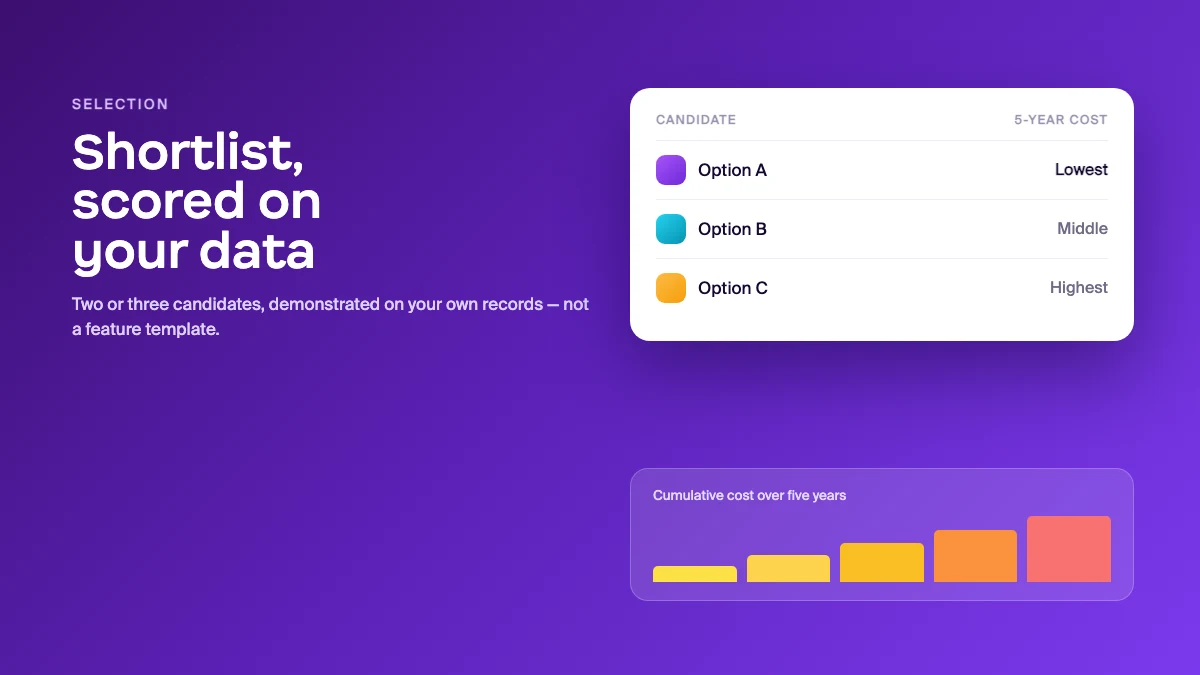
Shortlist & demos on your data: Two or three candidate systems, demonstrated on your own records, so you judge real fit instead of slideware.
Five-year cost math: Licenses, hosting, implementation, and support priced over five years, so the cheap option that gets expensive is visible early.
A recommendation in writing: You get the reasoning, not just the verdict, and you can challenge it line by line.
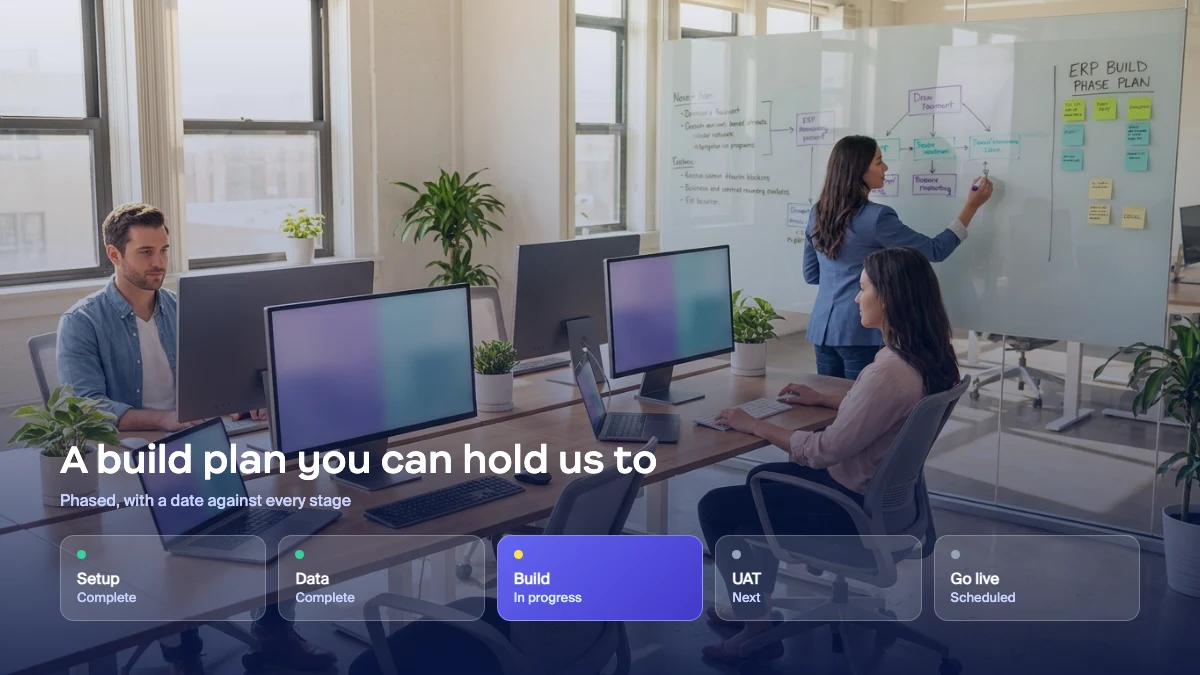
Process design first: Future workflows are agreed with the people who do the work before anything is configured.
Configuration & migration: Standard-first setup and disciplined data migration, reconciled against your source totals.
Integrations: Your storefront, shipping, banks, and payroll connected, so data stops being re-typed between tools.
Training & adoption: Role-based training on your own configured system, because an unused ERP is the most expensive kind.
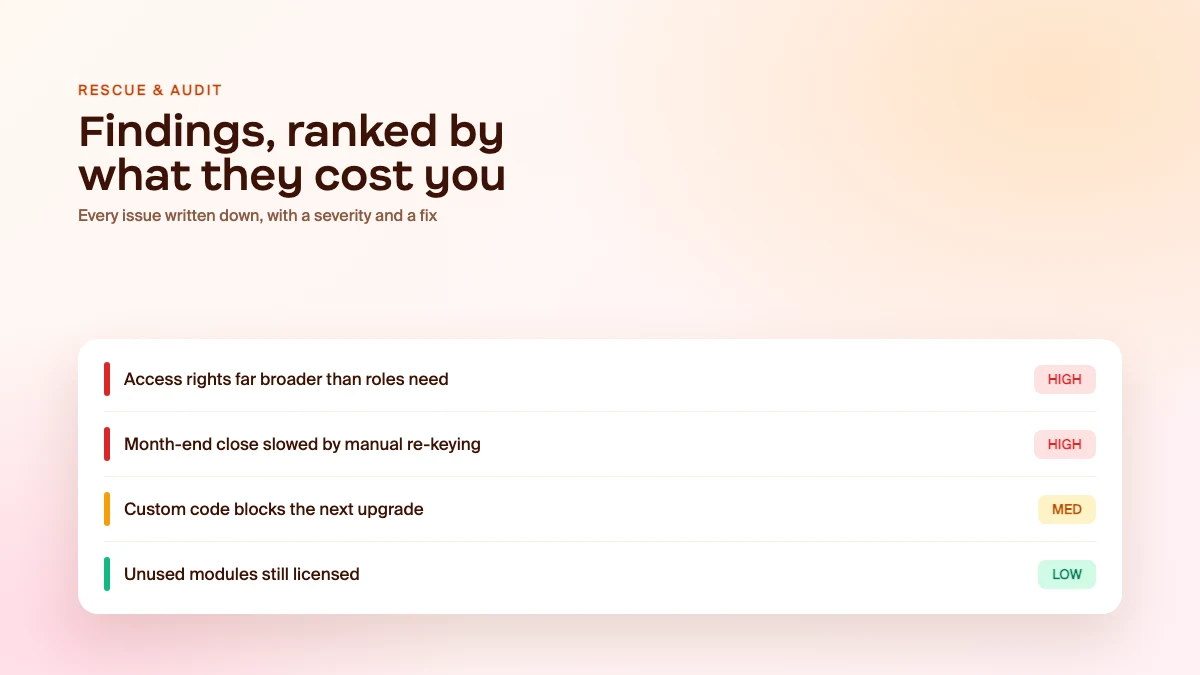
Audit before rebuild: A structured look at setup, data, and usage that shows what is actually broken. Most rescues do not need a restart.
Stabilize what you own: We fix the configuration, permissions, and reports that make daily work painful.
Re-implementation only if needed: When a restart really is cheaper, we say so and show the math behind it.
A safe second opinion: Read-only access is enough for the first pass. Your current partner does not need to be involved.
Business process automation: Manual handoffs between systems and people are replaced with rules the system runs on its own.
ERP AI agents: Working agents that draft follow-ups, chase overdue invoices, and reconcile lines inside your system.
Ask your ERP questions: Our AI connector lets your team query the system from Claude or ChatGPT in plain language.
Reporting that runs itself: Dashboards on live data, so decisions stop waiting for the weekly export.

CPA-led bookkeeping: Books kept inside the same system that runs your operations, with a CPA on our leadership team.
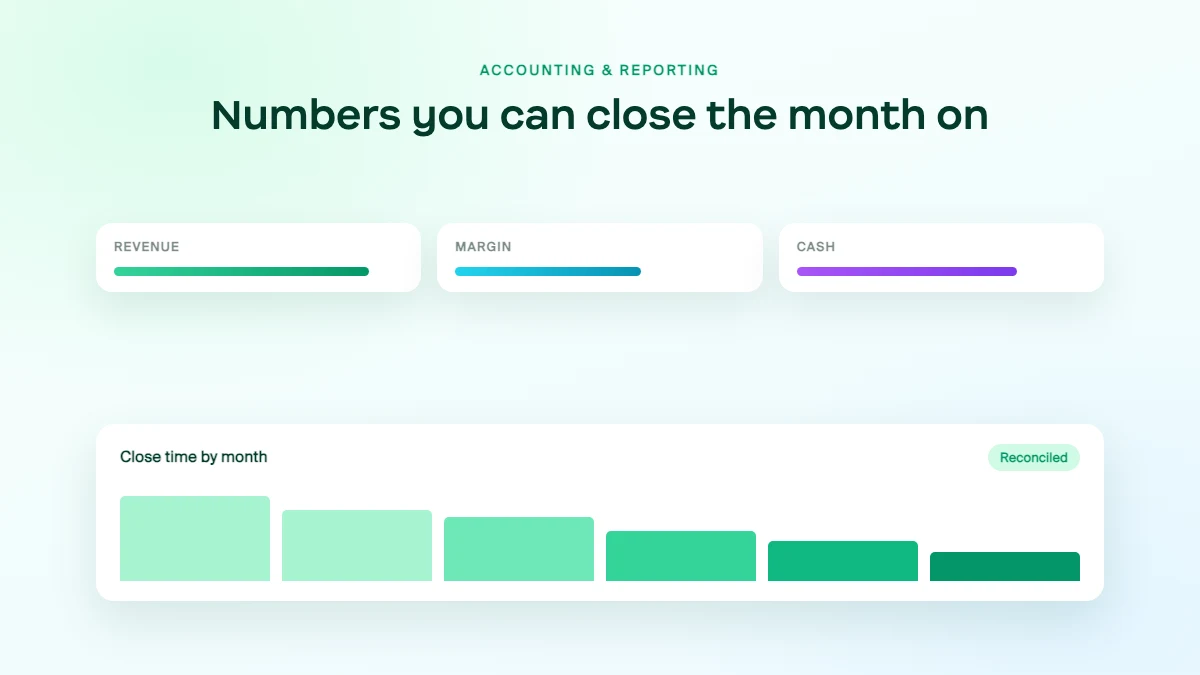
A close you can trust: Month-end built on reconciled, connected data instead of exports and corrections.
Power BI reporting: Leadership dashboards for revenue, margin, and stock that update themselves.
Forecasts that mean something: Sales, operations, and finance numbers that reconcile, so planning rests on one version of the truth.

A recommendation you can challenge
Selection is where an ERP consulting firm saves you the most money, or costs you the most. We shortlist from the systems below and put the reasoning in writing. The full method, deliverables and pricing logic live on our ERP selection consulting page.
 Odoo
Odoo NetSuite
 Sage
Sage Dynamics 365
 SAP Business One
Pure advisors sell independence by refusing to implement. Implementation shops sell the build they already decided on. We sit deliberately between the two, because advice that has never been costed against a real build is just an opinion. What keeps it honest is the commercial terms: no vendor pays us a commission, and our fee is fixed in writing whichever way the recommendation goes. Our deepest bench is Odoo, where we hold an official partnership — and that still does not make it your answer. If the honest read is keeping the system you own and fixing the setup, the report says exactly that.
How a Consulting Engagement Runs







Why Businesses Choose Index World
The people who advise are the people who build
The same in-house team maps your workflow, writes the recommendation, and delivers it. Advice never arrives disconnected from what it actually costs to build.
Founded by an engineer and a CPA
Index World was started in 2018 by an ERP technical expert and a CPA, the two disciplines that usually argue across the table, on the same side from day one.
Fixed fees, agreed before work starts
Every phase is priced in writing before it begins. No hourly billing, and no change orders when the work turns out harder than someone estimated.
Every good system starts with a conversation. Talk to our team →
Advice that ended in working systems
Every engagement below started as a conversation about workflow, not software. Read what changed for each team.
Solutions for Every Industry
From manufacturing to multi-channel retail, we tailor ERP, accounting, reporting and automation to the way your industry actually works. Explore the solution built for yours.

















How much does an ERP consultant cost?
In the US, independent ERP consultants commonly bill between $50 and $150 an hour, and selection projects at larger firms often reach five figures. Treat those as industry ranges, not our quote. Index World works on fixed fees agreed in writing per phase, with no hourly billing, so the number you sign is the number you pay.
What drives the price
Scope does: how many workflows we map, how many candidate systems we evaluate, and whether the engagement continues into implementation oversight or delivery. The first conversation is free, and you leave it with an honest read on scope either way.
ERP consulting, answered.
What is an ERP?
ERP stands for enterprise resource planning, which is a complicated name for a simple idea: one system where your quotes, orders, stock, invoices, payroll, and reports live together instead of in five disconnected tools. When people say Odoo, NetSuite, SAP, or Dynamics 365, they mean ERP systems. If your team re-types the same order into three screens, an ERP is the thing that ends that.
What is an ERP consultant?
An ERP consultant advises a business on choosing, implementing, or fixing an ERP system. A good one starts from your processes rather than a product: mapping how work flows today, defining what the system must do, and only then recommending software, configuration, or changes.
What does an ERP consultant do?
Day to day: process mapping, requirements gathering, system evaluation, implementation planning, data migration strategy, and training plans. At Index World the same firm also delivers the build, so the advice you get has been priced and tested against real delivery work.
How do I choose an ERP consultant?
Ask three things of any ERP consulting firm. Do they map your workflow before naming a product? Will they put fixed fees and scope in writing? Can they show comparable clients? Be wary of anyone who recommends a specific system in the first meeting.
How much does an ERP consultant cost?
Selection engagements are priced by scope, not by hour: how many workflows we map and how many candidate systems we evaluate. A two-week workflow review and written recommendation is the usual starting shape. You get the number in writing before anything begins, and the first conversation costs nothing.
Do you only recommend Odoo?
No. We are an official Odoo partner and say so openly, but selection work starts from your requirements. When another system, or the one you already run, is the better fit, that is the recommendation you get, in writing.
Who are the top ERP providers?
For US small and mid-market companies, most selections come down to Odoo, NetSuite, Microsoft Dynamics 365 Business Central, Acumatica, Sage, or SAP Business One, most of them cloud ERP platforms, with QuickBooks plus add-ons serving the smallest teams. Each fits a different size, budget, and workflow, so the right question is not which is best but which fits how your business runs. See how we think about ERP solutions by company size.
Our ERP is not working for us. Can you fix it without a re-implementation?
Usually, yes. Most struggling systems suffer from setup, data, or adoption problems rather than the wrong software. We start with an audit of configuration, data quality, and real usage, then fix what is broken. Re-implementation is the last resort, and when it truly is the cheaper path, we show you that math before you commit to anything.
What are the 4 pillars of ERP?
The four pillars most often cited are finance, operations covering inventory and manufacturing, sales and customer management, and human resources. A well-implemented system connects all four so data entered once flows everywhere. In practice a fifth pillar decides success: reporting, because leadership only trusts a system it can see into.
Is ERP difficult to learn?
Not when the system is set up around how your team already works and training is role-based on your own data. ERP earned its hard reputation from projects where people were trained on generic demos of a system configured around software defaults. Adoption is a design outcome, not a talent test.
Will AI replace ERP consultants?
AI is changing the work faster than most firms admit. We use it in delivery, build ERP AI agents for clients, and publish our own AI connector, so this is not a theoretical answer. It replaces the repetitive layer: data cleanup, first-draft configuration, documentation. It has not replaced judgment about how a specific business should run, and that judgment is what you hire a consultant for. The longer version is in our essay, will AI replace ERP consultants.