



ERP Selection Consulting, In Writing
Choosing an ERP is the most expensive software decision your company will make, and most selections are run by the sellers. Our ERP selection consultants referee it instead: weighted requirements from your own workflows, scripted demos on your data, a five-year cost model, and one recommendation in writing your leadership can challenge line by line. No vendor pays us anything, and the verdict can be keeping the system you already own.
- 150+clients on three continents
- 100+in-house specialists
- 2018founded, clients retained since
- 5.0on Clutch, 4.8 on Google
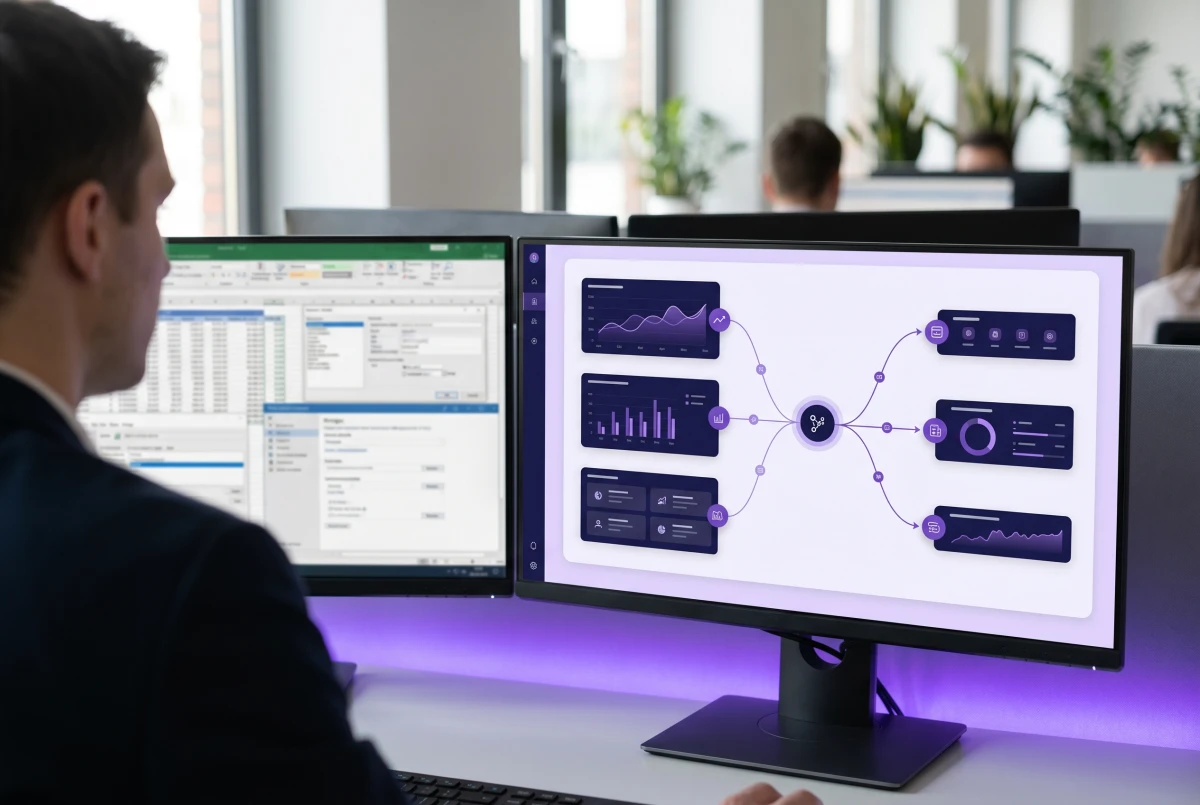
What does an ERP selection consultant do?
An ERP selection consultant runs the choosing of your next system as a disciplined project: requirements from your workflows, a weighted scoring matrix, scripted vendor demos on your data, a five-year cost model, and a written recommendation. The job is to referee a decision that vendors would otherwise run for you, on their terms.
Why independence is the whole product
Most selection advice in this market is paid for by the sellers: referral fees, reseller margins, implementation contracts riding on the recommendation. We take none of it. Our fee comes from you and is fixed in writing whichever way the verdict goes. We do hold an official Odoo partnership, and we say so on every page; the discipline that keeps the verdict honest is structural: fixed fees, a challengeable document, and scoring your current system as a real candidate.
How to choose the consultant for the selection itself
Ask who pays them, whether the recommendation arrives in writing with scores you can challenge, and whether keeping your current system is an allowed answer. Firms that stumble on those three are selling software, not advice. The broader vetting checklist lives on our ERP consultant page.

The six ways ERP selections go wrong
Every expensive ERP regret we are hired to rescue started in one of these six rooms. The method on this page exists to lock each door.
Chosen from a demo
Demos are theater on the vendor’s best data. Selections that start there end with the business bending to fit the software.
Requirements from a template
Downloaded checklists score every system as a fit. Requirements only protect you when they come from your own workflows.
Compared on sticker price
Year-one license cost is the smallest number in the deal. The five-year total is where selections are won or regretted.
The current system never competes
Replacing a fixable setup is the most expensive mistake in this industry. Your existing system deserves a score too.
Decided without the users
When the people who do the work first see the system at go-live, adoption fails on schedule.
Advised by the seller
A recommendation from someone paid by the vendor is a quote, not advice. Independence is the entire product here.
The Selection Method, Stage by Stage






Where the verdict leads next: ERP implementation, ERP migration, ERP integration once the new system has to talk to the rest of your stack, or an audit of the system you keep.
Why teams trust us with the choosing
No vendor commissions
Nobody pays us to recommend them. Our fee comes from you, is fixed in writing, and does not change with the verdict.
CPA-led cost modeling
The five-year model is built with accounting discipline, so it survives your CFO and your board.
Grounded by real delivery
We implement systems for a living, so fit scores reflect what platforms actually do in production, not what datasheets claim.
Fixed fee, stated up front
Selection is scoped and priced in writing before we start. No hourly billing, no meter.
Honest about the boring answer
A meaningful share of our selections end with: keep your system, fix the setup. We put that in writing when it is true.
Since 2018, nobody lost
More than 150 clients across three continents and not one lost to a bad experience. Engagements run on US hours.

How much does ERP selection consulting cost?
At large advisory firms, dedicated selection projects commonly reach five figures; independent consultants bill in the industry’s usual 50-to-150-dollar hourly range. Treat both as industry context, not our quote. Index World prices selection as one fixed fee, agreed in writing before the workflow baseline starts, and it does not change with the verdict.
The cheapest insurance in the project
Selection fees are a rounding error against a wrong system: five years of misfit licenses, workaround labor, and an eventual re-implementation. Paying for a refereed decision once is how you avoid paying for the same decision twice.
Solutions for Every Industry
From manufacturing to multi-channel retail, we tailor ERP, accounting, reporting and automation to the way your industry actually works. Explore the solution built for yours.
















Choices that held up in production
Systems these teams still run daily, chosen and built with the discipline on this page.
ERP selection, answered.
What is ERP selection consulting?
ERP selection consulting is a structured, independent process for choosing the system your business will run on: workflow mapping, weighted requirements, a shortlist, scripted demos on your own data, a five-year cost model, and a written recommendation. Done right, it protects you from the most expensive software mistake a company can make.
What does an ERP selection consultant do?
They referee the decision. That means writing requirements from your operations, cutting the market to serious candidates, forcing vendors to demonstrate on your data under the same script, modeling total cost over five years, and putting one recommendation in writing with the reasoning attached.
What should I ask before hiring an ERP selection consultant?
Three questions expose most firms. Who pays you, and does any vendor pay you anything? Will the recommendation be written, with scores and reasoning I can challenge? Can the answer be keeping my current system? If any answer is fuzzy, keep looking.
Do you take vendor commissions or referral fees?
No. Our selection fee comes from you, is fixed in writing before we start, and does not change with the verdict. We hold an official Odoo partnership and say so on every page; when the scoring points elsewhere, elsewhere is what the report says.
How long does an ERP selection take?
A focused mid-market selection typically runs six to ten weeks from workflow baseline to written verdict, driven mostly by demo scheduling and how many stakeholders score. You get a dated plan at kickoff.
Can the recommendation be to keep our current system?
Yes, and it happens more often than vendors would like. The current setup is scored on the same matrix as every challenger. When fixing it beats replacing it, the verdict says so, and our audit and rescue services exist for exactly that path.
Should the selection consultant also implement the system?
The honest trade-off: pure advisors offer separation but advice untested by delivery; implementers offer delivery but a conflicted verdict. We resolve it with structure rather than slogans: fixed fees that do not depend on the outcome, a verdict document you can take to any implementer, and delivery as an option, never a condition.
What do we actually receive at the end?
Five deliverables: the workflow baseline, the weighted requirements matrix with scores, the demo scorecards, the five-year cost and risk model, and the written recommendation with a phased roadmap. Every one of them is yours, whoever builds next.